
Your kitchen waste bin probably contains more usable food than you realise.
Every day, people throw away potato peels, coriander stems, carrot tops, broccoli stalks, citrus skins, leftover rice, and slightly overripe fruits without thinking twice. Most of these ingredients still carry flavour, texture, and nutritional value, but they are treated like waste simply because people are used to discarding them.
Zero waste cooking changes that mindset completely.
Instead of focusing only on the most visually appealing parts of ingredients, zero waste cooking encourages people to use as much of the ingredient as possible. It is practical, cost effective, environmentally conscious, and surprisingly creative once you start understanding how much potential everyday kitchen scraps actually hold.
The best part is that zero waste cooking does not require expensive equipment or extreme lifestyle changes. Small shifts in daily cooking habits can dramatically reduce food waste while helping you get more value, flavour, and nutrition from the ingredients you already buy.
What Is Zero Waste Cooking?
Zero waste cooking is exactly what the name suggests.
It is the practice of reducing kitchen waste by using ingredients more completely and intentionally. Instead of throwing away peels, stems, leaves, and leftovers automatically, you find creative and practical ways to reuse them in everyday meals.
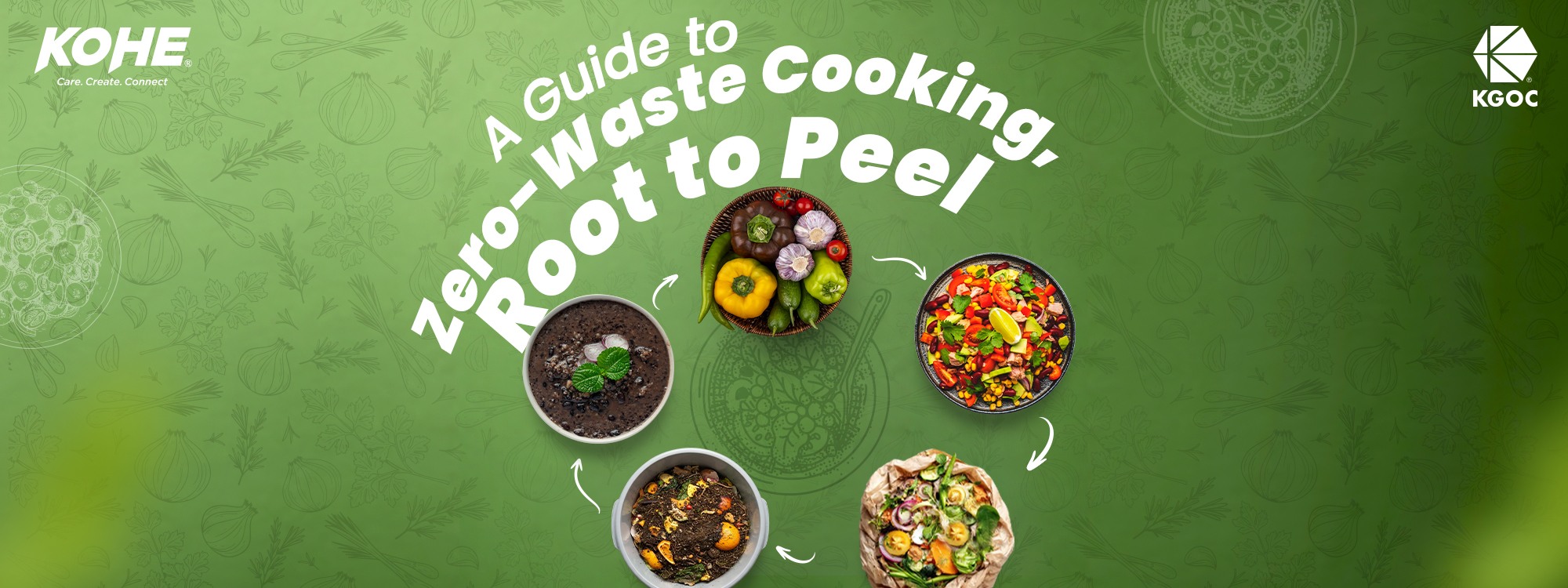
This approach is also commonly called root to peel cooking because it encourages using almost every edible part of fruits and vegetables.
For example:
Coriander stems can be blended into chutneys.
Broccoli stalks can be stir fried or added to soups.
Potato peels can become crispy snacks.
Vegetable scraps can become homemade stock.
Leftover rice can be transformed into tikkis or fried rice.
Zero waste cooking is not about perfection.
It is about becoming more mindful of how ingredients are used and reducing unnecessary food waste in simple, realistic ways.
Why Reducing Food Waste Matters
Food waste is a much larger issue than most people realise.
India wastes millions of tonnes of food every year, and a significant portion of that waste starts inside home kitchens. Sometimes it happens because ingredients spoil before being used. Other times it happens because edible portions are discarded out of habit.
Reducing food waste has benefits beyond sustainability.
It also helps save money, improve meal planning, and encourage more creative cooking habits.
When people begin using ingredients more completely, grocery expenses naturally reduce because the same produce stretches further across multiple meals.
More importantly, zero waste cooking helps create a healthier relationship with food. Instead of treating ingredients as disposable, people start appreciating the effort, resources, and value behind every item they purchase.
Turn Vegetable Scraps into Homemade Stock
One of the easiest ways to begin zero waste cooking is by making homemade vegetable stock.
Every time you chop vegetables, save the usable scraps instead of throwing them away. Onion skins, carrot peels, tomato ends, celery leaves, garlic peels, mushroom stems, and herb stalks can all be collected in a freezer safe bag.
Once the bag is full, add everything to a pot with water and simmer for around 45 minutes.
The result is a rich homemade stock that can instantly improve soups, gravies, curries, dals, and sauces.
Unlike packaged stock cubes or processed broths, homemade stock contains fresh natural flavour without unnecessary preservatives.
It also costs almost nothing because you are using ingredients that would normally end up in the bin.
Stop Throwing Away Peels
Many people automatically remove peels without considering how useful they actually are.
Potato peels, for example, can be roasted with oil, salt, and spices to create crispy snacks that taste better than packaged chips. Citrus peels can be zested into desserts, infused into water, or dried for flavouring.
Even cucumber and bottle gourd peels can be used in chutneys and stir fries.
The peel often contains concentrated flavour and nutrients, which means throwing it away unnecessarily increases food waste.
The key is proper cleaning and preparation.
Once ingredients are washed properly, many peels become completely usable and surprisingly delicious.
Stems, Leaves, and Stalks Deserve Attention Too
Vegetable stems and stalks are often ignored even though they are packed with flavour.
Coriander stems are stronger in flavour than the leaves themselves and work perfectly in chutneys, curries, and marinades. Broccoli stalks can be sliced thinly and sautéed. Cauliflower leaves can be roasted. Beet greens can be cooked similarly to spinach.
The issue is not that these parts are unusable.
The issue is that most people were never taught how to cook them.
Using a good kitchen knife becomes especially important here because tougher stems and stalks need clean, controlled cutting. Sharp knives make prep easier and help avoid turning ingredients into uneven pieces.
Learn To Reinvent Leftovers
Zero waste cooking is not limited to vegetables alone.
Leftovers can also become entirely new meals.
Leftover rice can become lemon rice, fried rice, tikkis, or stuffed parathas. Extra rotis can be transformed into crispy snacks or rolls. Overripe bananas make excellent banana bread or smoothies.
Cooked vegetables can be reused in sandwiches, wraps, or soups instead of being forgotten inside containers in the fridge.
This mindset shift is what makes zero waste cooking sustainable long term.
You stop viewing leftovers as unwanted food and start seeing them as ingredients for another meal.
Compost What You Truly Cannot Use
Not everything can or should be eaten, and that is completely fine.
Certain scraps like tea leaves, eggshells, or completely unusable vegetable waste can still serve a purpose through composting.
A small compost setup at home can convert food scraps into nutrient rich compost for plants and gardens. It reduces the amount of waste sent to landfills while helping create a more circular kitchen system.
Even a basic compost bin can make a meaningful difference over time.
Plan Meals around Whole Ingredients
Buying whole vegetables instead of precut produce is another simple but effective zero waste habit.
Whole vegetables stay fresh longer, cost less, and provide more flexibility in cooking. A full cauliflower gives you florets, stalks, and leaves to use across multiple recipes.
Meal planning also helps reduce waste.
When you know how ingredients will be used throughout the week, there is less chance of produce spoiling unused in the refrigerator.
Simple planning prevents impulse waste.
The Small Habit That Changes Your Kitchen
Zero waste cooking is not about becoming perfect overnight.
It is about making smaller, smarter decisions every day.
Use the stems. Save the peels. Reinvent leftovers. Compost the rest. Start paying attention to ingredients before throwing them away automatically.
Once you begin cooking this way, you realise how much value has always been sitting inside your kitchen.
More importantly, you start wasting less, saving more, and cooking with greater intention.
That is what zero waste cooking is truly about.
Start with one ingredient this week and challenge yourself to use more of it than you normally would. Small changes in the kitchen often lead to the biggest long term habits.

 India
India  International